
Scope 01
HUBSPOT · SALESFORCE
CRM and Revenue Data
We tie test results back to the CRM your team already runs, so a "winning" variant gets judged on real pipeline, not just conversion volume.
We deliver conversion rate optimization services for mid-market and private equity companies between $30M and $500M ARR, strategy and implementation both, testing, UX research, and technical fixes working together, so more of the traffic you're already paying for actually turns into pipeline. Part of our work as a B2B demand generation agency.
Every channel is bringing more visitors than last year, and the conversion rate has stayed flat the whole time, so growth in traffic isn't actually translating into growth in pipeline.
Tests get run, and the results live in the testing tool's own dashboard, disconnected from the CRM, so a "winning" variant might be producing more form fills that never turn into real pipeline.
A button color gets changed, a headline gets tweaked, the test ends after two weeks, and nobody's confident the result wasn't just noise, so the next test starts from the same guesswork as the last one.
A form that's too long, a page that loads too slowly, or a confusing next step quietly costs a qualified lead before a rep ever gets the chance to talk to them.
A single high-traffic page with a broken conversion path can cost more pipeline than a whole quarter of new campaigns. Most companies never go back and test the pages already carrying the most traffic.
The wasted spend isn't in acquisition. It's in every visitor who arrived ready to convert and hit a slow page, a confusing form, or a test result nobody could actually trust.
Pages get designed once and left alone. Nobody's testing whether a different approach would convert better.
Tests run occasionally, but sample sizes are too small and results too inconclusive to actually trust.
Most $30M-$500M ARR companies sit hereTests are statistically sound, but results never get tied back to what actually happens in the CRM after a form fill.
Every test is rigorous, every result is tied to real pipeline impact, and the site keeps improving based on evidence.
This engagement builds your path hereEvery test runs with proper sample sizes and statistical rigor, so a "winning" variant is actually winning, not noise you're mistaking for a result.
Signal, not noise. Six shifts, one program.
UX research shows exactly where visitors hesitate or drop off, so redesigns fix real friction instead of guessing at what might help.
Signal, not noise. Six shifts, one program.
Performance audits and technical fixes remove the load-time friction that's quietly costing conversions before a visitor even sees your offer.
Signal, not noise. Six shifts, one program.
Results connect to what happens in the CRM after a conversion, so you're optimizing for real revenue impact, not just a bigger number on a dashboard.
Signal, not noise. Six shifts, one program.
Tests get sequenced by potential impact and ease of implementation, so effort goes toward what will actually move the needle first.
Signal, not noise. Six shifts, one program.
More of your existing traffic converts, so you get more from the same acquisition spend instead of needing to buy your way to growth.
Signal, not noise. Six shifts, one program.
 GA4
 GTM
 Looker Studio
 Hotjar
 Clarity
User interviews
 Figma
 VWO
 Optimizely
 Convert
 HubSpot
 Salesforce
 WordPress
 Core Web Vitals
Before we test anything, we make sure we can actually trust the data.
We audit your current analytics setup, tracking, and funnel data, fixing gaps and inconsistencies so every decision that follows is grounded in numbers you can actually rely on, not a dashboard quietly missing half the picture. Where funnel tracking hasn't been validated in a while, this stage surfaces exactly what's broken before it skews a single test result.
We find out where users actually get stuck.
Session recordings, heatmaps, and user journey mapping show exactly where visitors hesitate, click away, or abandon a form, so we're fixing real friction points, not redesigning based on internal opinion about what looks better.
We decide what to test first, based on impact, not instinct.
Every potential test gets evaluated on potential value, importance, and ease of implementation, so the roadmap goes after what will actually move the needle first, not whatever's easiest to ship this week.
We build and run the tests ourselves, not just recommend them.
This is the difference between a testing tool and a testing program: everything from button placement to full page redesigns gets tested with proper statistical rigor, so a result you act on is actually a result, not a coin flip dressed up as data.
We fix the speed issues costing you conversions before a test even starts.
Load times, server response, and core web vitals get audited and optimized, since a visitor who leaves before the page finishes loading was never going to convert no matter what the page said.
We report on what actually happened to revenue, not just the test.
Results get tied back to pipeline and revenue wherever the data allows, so you know a winning variant actually produced more qualified pipeline, not just a bigger number in the testing tool's own dashboard.
Analytics & tracking
Funnel data
Event tracking
RUNNING
Behavior research
Heatmaps, recordings
Form analytics
STANDBY
CRM data
Pipeline, deal stages
Lead quality
RUNNING
Design & variants
Wireframes
Variant builds
STANDBY
Experiments
A/B and multivariate
Split URL tests
STANDBY
Site & speed
Page changes
Core Web Vitals
STANDBY
Our tools are chosen because they support rigorous testing and real attribution, not because they're the best-known platforms in the category.
We tie test results back to the CRM your team already runs, so a "winning" variant gets judged on real pipeline, not just conversion volume.
We run tests and user research on tools suited to your traffic volume and technical stack, chosen for statistical reliability, not brand recognition.
Used to analyze session data and test results at scale, surfacing friction patterns and prioritizing what to test next faster than manual review would allow.
Tracking and funnel data corrected and verified before any testing begins.
Analytics Tracking Audit · Funnel Data Validation · Attribution Gap Report · Instrumentation Fixes
Real friction points identified through session data, not internal opinion.
Session Recording Synthesis · Heatmap Analysis · Friction Point Inventory · Documented User Journey
Running with proper statistical rigor, sequenced by potential impact.
Prioritized Test Roadmap · Live A/B Tests · Sample Size Discipline · Winner Documentation
Test results connected to actual pipeline outcomes, not just conversion volume.
Test-to-Pipeline Reporting · Cost-per-Lead Trend · Core Web Vitals Report · Revenue-Impact Ledger
Typical engagement: audit and research in the first two to three weeks, with testing running continuously afterward.
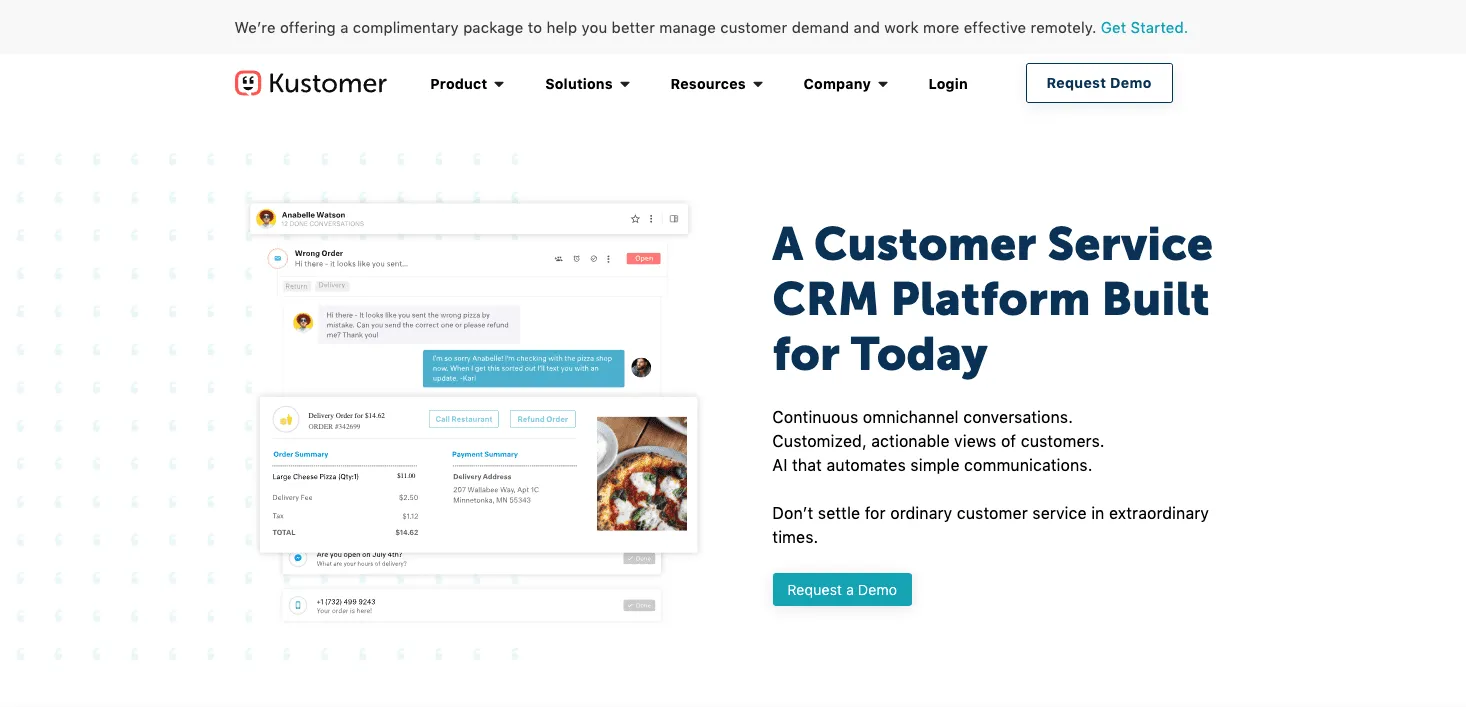
Kustomer's marketing team was working around a hasty, problematic WordPress setup: pages were slow, visual imperfections leaked through the site, and every landing page change needed a developer. We fixed the performance bottlenecks, cleaned up the codebase, and rebuilt the page editing experience so the team could iterate on landing pages quickly and deploy on a weekly basis.
Senior operators describing what changes when the work is run with discipline.
When it comes to a high-scale revenue delivery initiative, DevriX gets the job done, period. They quickly jumped in on a partially-started project and led it to completion in record time. They worked with our team to iron out the finer details while building the full picture. Communication, attention to detail, and attentiveness were all 5-star. Stellar work.
A 30-minute audit call. We'll review your current funnel and show you exactly where visitors are dropping off before they ever become pipeline. No deck.
The questions RevOps, Marketing, and Sales leaders ask us on the first call, answered directly.
Some changes show measurable results within a few weeks, particularly technical and UX fixes. Conversion optimization is an ongoing process though, and the strongest gains tend to compound over several months of continuous testing.
Not necessarily. Lower-traffic pages may need a longer testing window to reach statistical significance, or a more qualitative research approach instead of formal A/B testing, and we'll recommend whichever is actually appropriate for your traffic volume.
Priority follows potential impact, importance, and ease of implementation, informed by real UX research and analytics, not internal opinion about what page probably needs the most work.
Ongoing. We'll make immediate improvements early on, but continuing to test and refine is what keeps the site improving over time instead of plateauing again after the first round of changes.
Wherever your CRM allows it, we tie test results and conversions back to actual pipeline and revenue outcomes, so a "winning" variant is judged on real business impact, not just conversion volume.
Yes. Most engagements continue as an ongoing testing program, since a single round of tests rarely captures the full opportunity available on a site.