
When you launch your website it has to be with a bang. No matter if you’ve built a new website or you’ve redesigned an old one, you have to tell the world about it.
How to create a buzz around your new website? A marketing plan is the answer to this question. Through digital marketing you can create engaging campaigns that not only promote your website but that are designed to reach as many people as possible.
For this reason, we’ve prepared a guide with five steps that will help you promote your website after its launch.
Read on and let us know about your experience of launching a website.
Create a Pre-Launch “Coming Soon” Teaser Campaign
You should start promoting your website before the actual launch.
Your website is similar to a movie that is about to be released. You need to create your own “Coming soon” campaign just like the trailers you see before you go to the movies.
People love to be the first to know about something new. If you can convince them that what you are creating is worth paying attention to, this effort will definitely pay off in the long run.
Start with a “Coming soon” landing page on your website. You can ask your visitors to subscribe to your newsletter so they can be the first ones visiting your website when it is up.
Furthermore, this way you can also start building email lists of your target audiences so that you can send them offers later on. Just don’t forget to ask your subscribers for permission to do that.
Think about those first subscribers as your brand ambassadors. They can assist you by spreading the word about your new website.
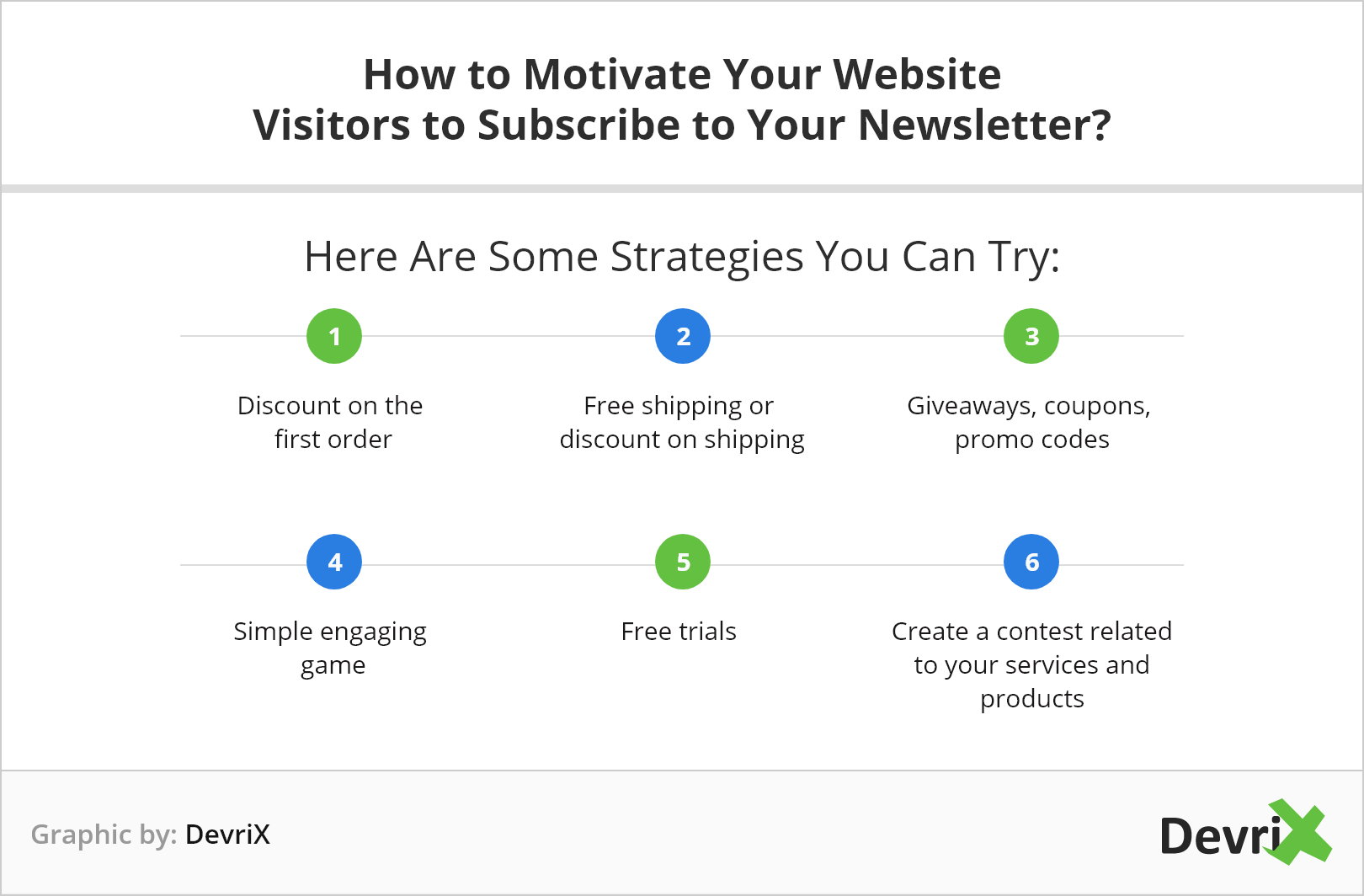
Therefore you need to motivate guests to leave their email addresses. How to do that? Offer surprises or special offers.
Here are some of the strategies you can try:
- Discount on the first order
- Free shipping or discount on shipping
- Giveaways, coupons, promo codes
- Simple engaging game
- Free trials
- Create a contest related to your services and products
It’s up to you what kind of incentives you want to give. Depending on your business you can be creative as you want to be.
Announce the Website Launch in a Newsletter to an Existing Database
You’ve created your “Coming soon” landing page where you’ve asked your visitors to leave their email and to subscribe to your newsletter. The next step is to send them an email that your website is up.
If your website is not new but redesigned, you can encourage your old database to check out your new website. You can create a special promotion for the customers who have already had a positive experience with your brand.
No matter if you target old customers or new ones, email marketing is necessary to build relationships with your customers.
Start a Social Media Campaign and Invest in Ads
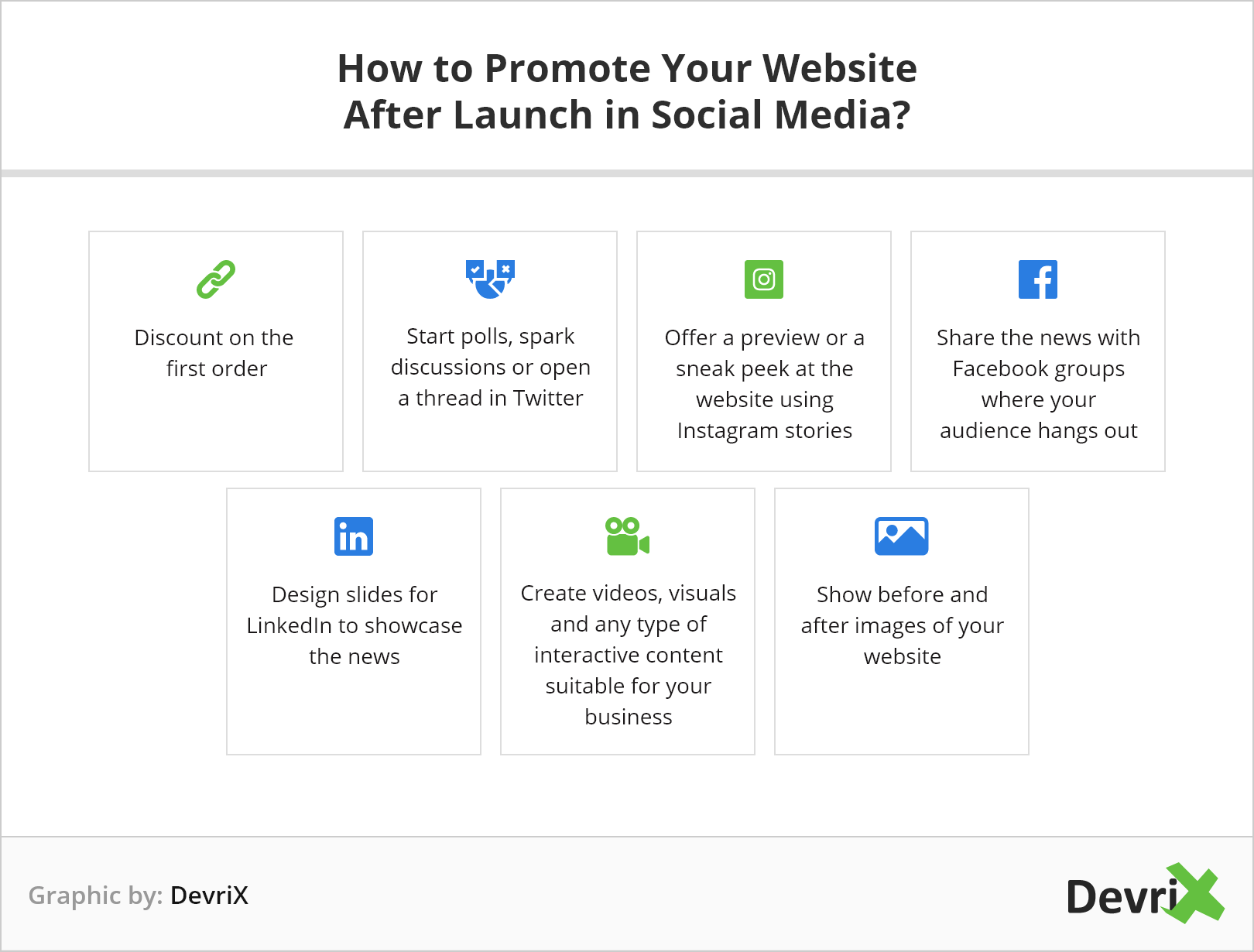
Social media is where you need to stay in touch with your audience. Create a social media plan to announce your new website. The focus should be on the new features and content on your website or how the redesign will benefit your guests.
Let’s make a quick list of ideas you can try:
- Share a link to your teaser landing page
- Start polls, spark discussions or open a thread in Twitter
- Offer a preview or a sneak peek at the website using Instagram stories
- Share the news with Facebook groups where your audience hangs out
- Design slides for LinkedIn to showcase the news
- Create videos, visuals and any type of interactive content suitable for your business
- Show before and after images of your website
It’s good to have organic posts across social media channels, but when you are launching something new you can’t count on organic traffic only. You need to invest in paid ads to promote your website.
Facebook has custom audiences. It’s one of the best tools for targeting audiences based on their location, age, and interests.
Instagram also has tools for targeting that are great for setting up an ad campaign.
Here you have an option for sponsored stories. Moreover, if you are an online shop, don’t forget about the shoppable posts which allow users to buy the product directly from their feed.
If your business is suitable for Twitter and you are active there, then promoted tweets would also boost traffic to the new website.
LinkedIn may be a good option if your services or products are B2B oriented. You can sponsor your content in order to reach out to the needed target audience of professionals.
Related article: How to Promote Your WordPress Website
Tell the Story Behind Your New Website
Explain to your customers why you’ve redesigned your website or what’s the story behind your new one. There are several ways you can do that.
Blog Posts
Publish a blog post or a series of articles to share your experience.
Here’s a quick list of topics you can write about so you can add value to your customers:
- Explain the process behind the redesign
- Give advice and share tips on building a website
- Mention challenges you need to tackle
- Tell your brand story
Guest Blogging
Guest blogging will help you to boost your brand awareness. Also, it is a great way to get more backlinks which will contribute to your ranking in Google.
You can do this even before your website launches by linking to your teaser landing page. This can help create additional interest before the big launch.
Consider Working With Influencers
Find influencers who can tell the story about your company and link it to your site. In addition, you can search for professionals in your field and start networking with them to create content together.
This strategy will help you acquire important connections, get backlinks, and reach out to a bigger audience.
Appear in Podcasts
Appearing in a podcast is a way to promote your website in a non-salesy way. There are a lot of businesses that are upon launching or redesigning a website. This can be an opportunity for you to share your insights with the podcast listeners.
Sharing your experience and giving tips will put you in a position as an expert which will improve your brand awareness and the interest in your new website.
Use Offline Media
If this makes sense for your business, you can use offline media to promote your new website in industry magazines, newspapers, even a TV if this is relevant.
Remember to Always Track and Analyze Your Website Performance
All the campaigns you launch need to have clear and measurable goals. No matter if you focus more on organic traffic or paid ads, work with influencers or do guest blogging, you need to track the performance.
This way you can see the ROI of your efforts and you will also find the weak points of your campaigns so you can improve them. Remember that the launch campaign is just the beginning step to turning your site into a sales machine.
Which tools should you use to track your performance?
- Google Search Console
- Google Analytics
- Insights and analytics of social media channels
Five Examples of “Coming Soon” Landing Pages to Get You Inspired
The 5th

Source: startupfashion.com
The 5th sells accessories. They created urgency with a countdown clock. They have also stated, “to get an exclusive access code sign up to our waitlist”. With this technique, they have built up an email list and provided an exclusive offer for those who have enrolled.
Center

Source: blog.wishpond.com
This is a pretty good example of a coming soon landing page by the GoToWebinar integration for tasks automation. Notice the headline “Be the first to know”. As we’ve discussed earlier people love to be the first ones informed when there is something new.
It has call to action buttons with an attractive “Keep me in the loop”. In addition, it has a countdown timer to create a sense of urgency and make guests subscribe as soon as possible otherwise they will miss out on the offer.
Backpacker Travel

Source: seedprod.com
This is a pretty simple example of a teaser landing page, but it has everything needed to convert visitors. It has a nice photo, straightforward headline and call to action button.
If guests want to receive an early invitation to the community of backpackers they just need to leave their email address.
Notice the “We promise to never spam you”. Customers often subscribe for a particular alert, and unsubscribe when they receive too many newsletters and other emails. Here, Backpackers promises to only keep you posted about the launch.
Best home

Source: Pinterest
This is a cute landing page which definitely attracts guests. It has a nice design, a countdown and a visible call to action button encouraging visitors to subscribe so they will be notified once the store opens.
It also has “About us” and “Contacts” menus in case customers want to know more about the brand or have any questions.
Notice the social media icons which show the brand is active on social media channels.
Bezar

Source: wblog.wishpond.com
This is an example of referral promotion by the eCommerce platform, now part of AHAlife. Visitors are encouraged to leave their email and invite their friends. After that everyone will be rewarded.
This tactic is great because it reaches more people. Consider adding a referral element to your landing page, but only if it’s right for you and your brand.
Wrapping up
Promoting the launch of a new or redesigned website is a must and should not be challenging. You have built an impeccable website and you should use the occasion to promote not only the site but your brand and company. Your website and your business’s success depend on it.
Try some of the strategies mentioned in this article and let us know which one worked for you.

Team DevriX
This article is crafted by DevriX's seasoned marketing team, boasting over four decades of collective expertise in crafting sophisticated marketing funnels, devising comprehensive content frameworks and pillars, implementing engaging email campaigns, and creating impactful social media content designed for scalability.
Our marketing experts specialize in the complete spectrum of inbound marketing strategies. As an accredited HubSpot Agency Partner and a Semrush Partner, we engage in meticulous research, blending our extensive experience with the unique insights of our highly skilled team.
We set benchmarks in content creation by incorporating cutting-edge marketing trends, leveraging in-depth industry research, and utilizing state-of-the-art AI tools for data segmentation and captivating content hooks. Our proficiency extends across a diverse range of sectors, including working with SMEs, Fortune 1000 companies, global B2B brands, major publishing entities, WooCommerce platforms, business directories, and affiliate networks.


